Coverage of a scene.Nobody changes seat.
A wide shot, a reverse shot and close-ups of one conversation. Each character sits once in a MYEQ 3D set and every camera finds them in place. You see the grey frame of each camera without paying and approve each panel with its price.
Four people, one table, seven cameras
Invented characters: Nora, Marten, Abel and Faris. Nora argues with Abel. On the left, the grey frame the set draws. On the right, the panel generated from that frame and each character's sheet.
Wide shot
All four in their seats on the first try. The generator added an empty chair in the foreground.
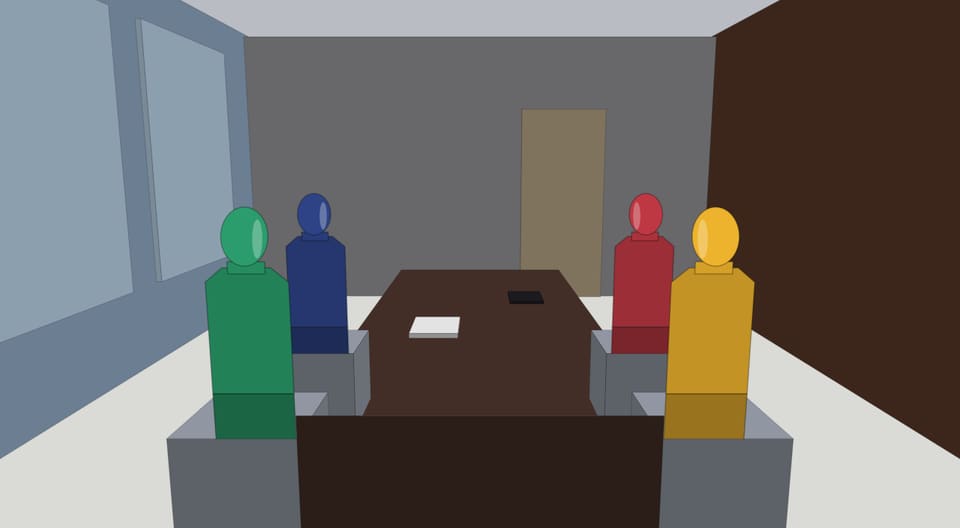
Grey frame, free 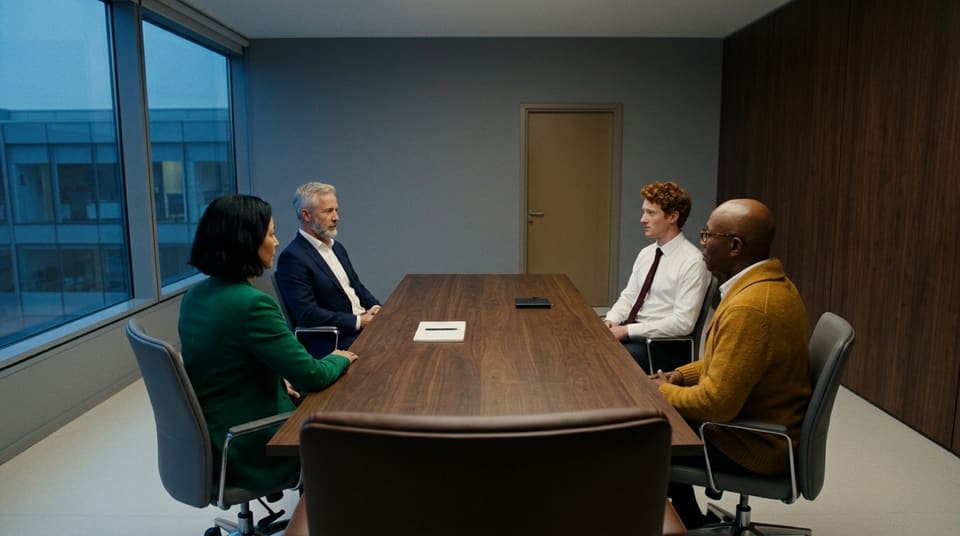
Photoreal panel, paid Reverse shot over the shoulder
Nora facing us, Abel's shoulder in the foreground. With the wide shot as the room reference, the windows and the light match.
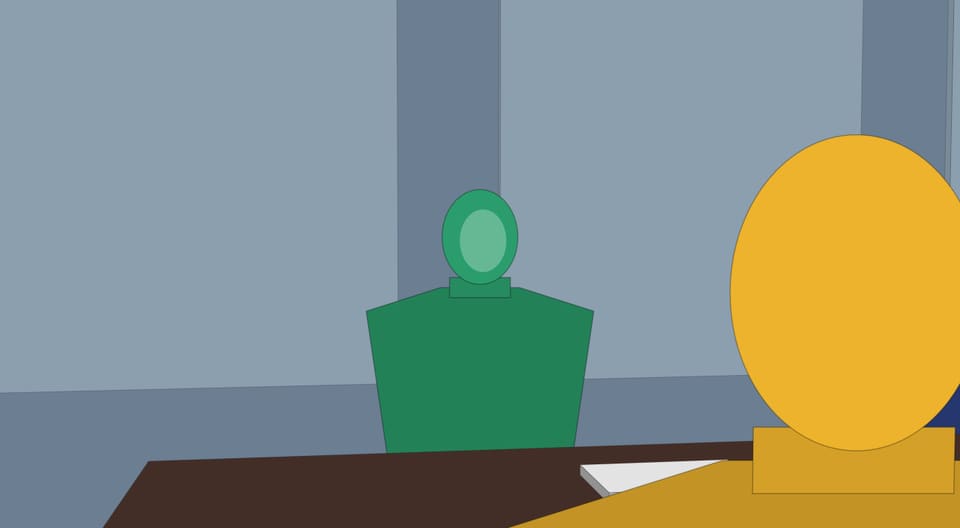
Grey frame, free 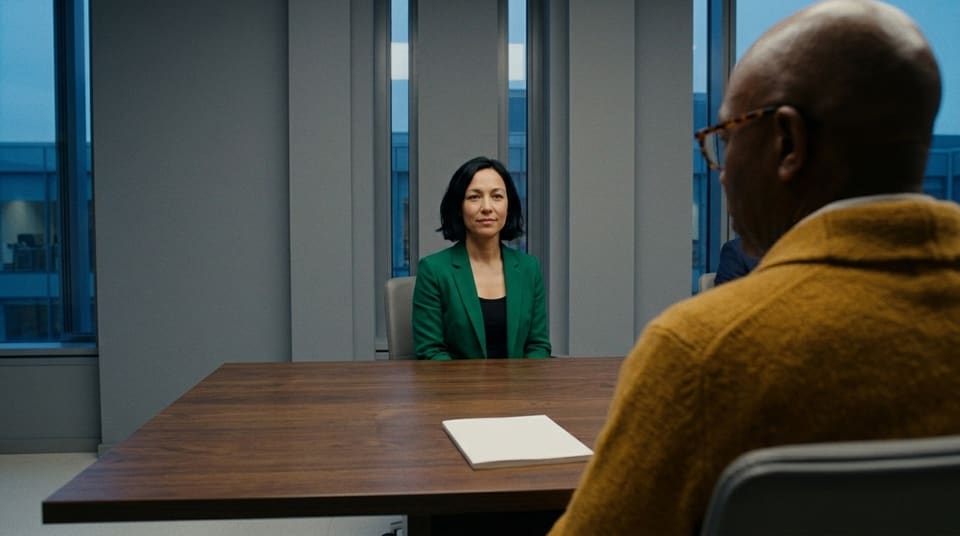
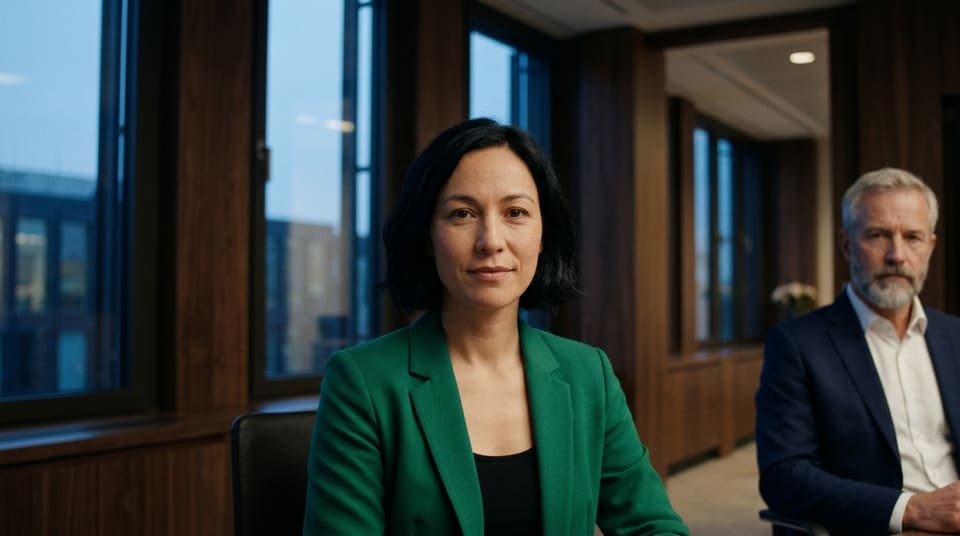
Photoreal panel, paid Close-up of Nora
The head takes the same height as in the frame. Marten should be cut by the edge and appears whole.
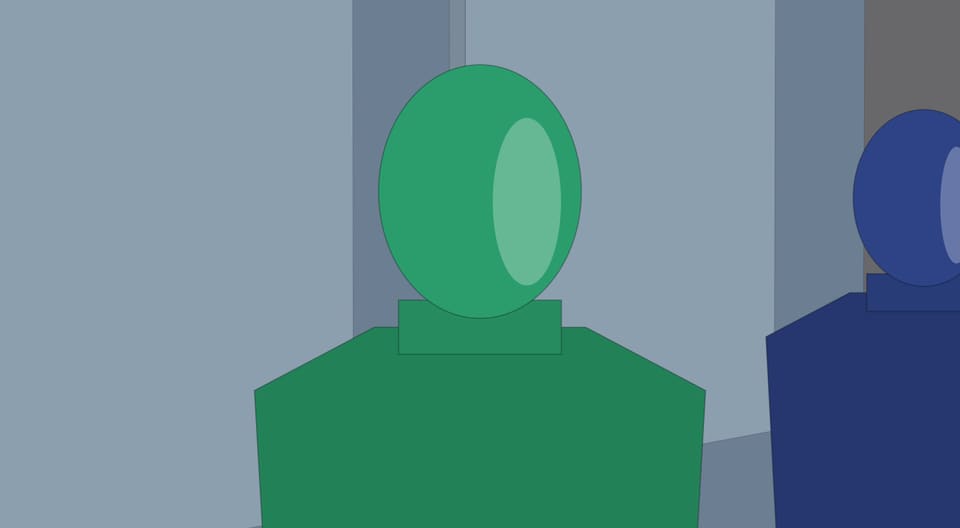
Grey frame, free 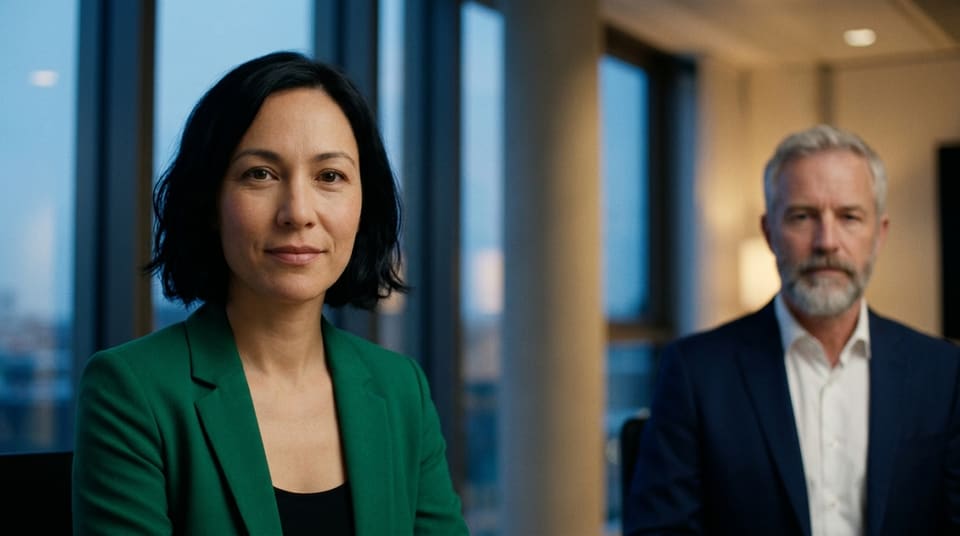
Photoreal panel, paid Close-up of Abel
The same method with another character and the wood wall behind: three of three tries inside the margin.

Grey frame, free 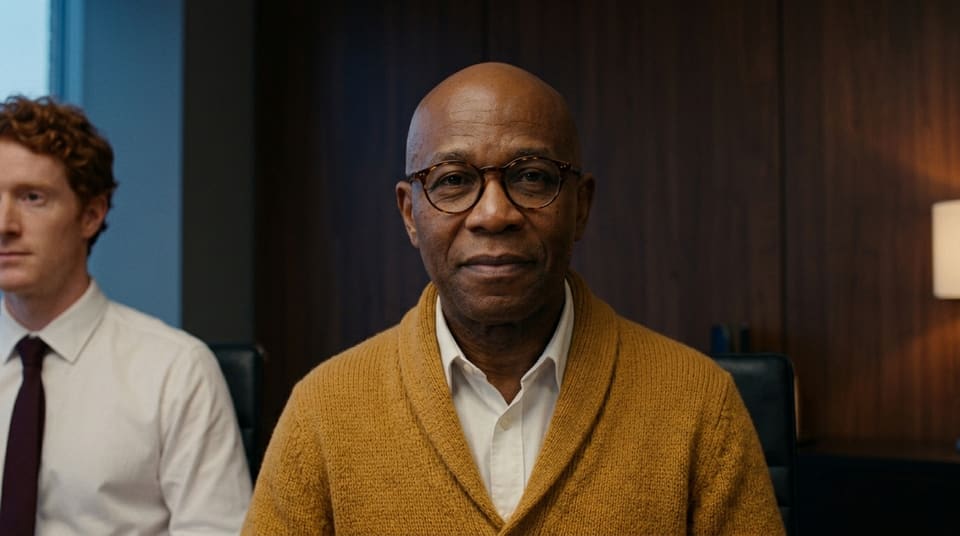
Photoreal panel, paid
Images generated in MYEQ.PRO on 19 November 2026 at 1376 × 768. The grey frames are the ones the product draws today; the wide shot and the reverse shot were generated from an earlier drawing of the same cameras.
The floor plan rules
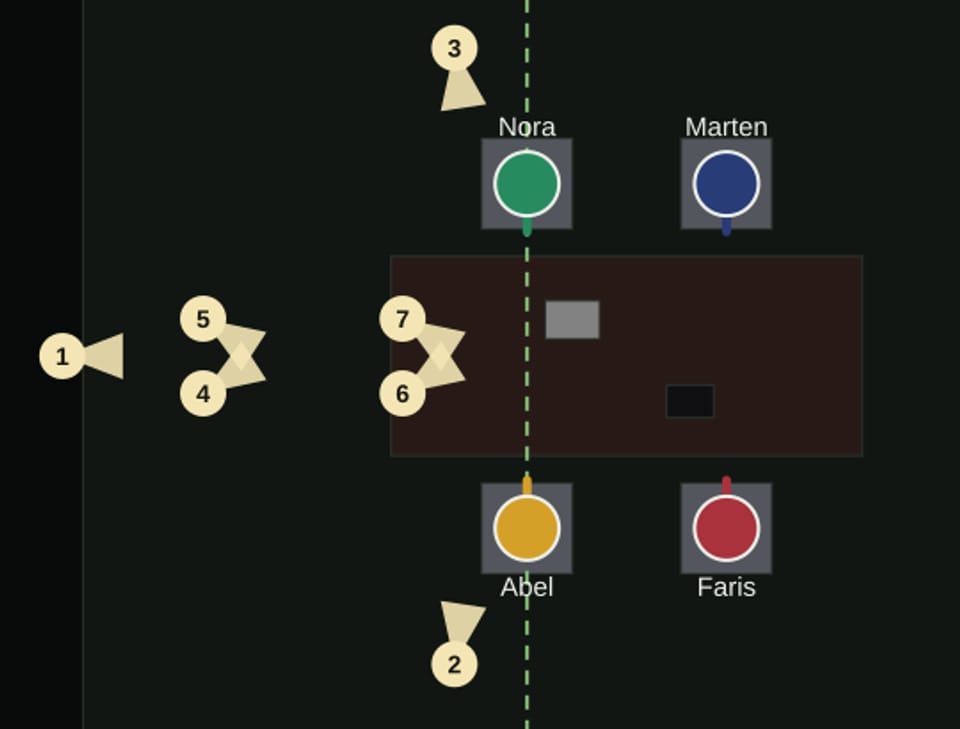
The cameras are numbered and all stay on the same side of the line between the two who talk. That is why Nora always looks toward screen right and Abel toward screen left. A camera across the line is refused unless you ask for it on purpose.
Ask the agent
Say the scene in one sentence
"Four people at a meeting table with windows; Nora argues with Abel." The agent takes the characters from your Bible and only asks for a missing sheet.
Check who sits where
The agent builds a simple set in MYEQ 3D and proposes the seats. It does not invent them: it proposes and waits. Moving a chair is free.
Look at the plan and the frames
You get the floor plan with numbered cameras and the grey frame of each one. Remove a camera, bring one closer or move someone to another chair until it works for you.
Approve each panel with its price
Each panel is quoted and generated on its own, starting with the wide shot. If you move a chair, only the panels that see it go stale; the rest are kept and not charged again.
Go on to video
With a locked camera, the approved panel is the first frame of the shot. If the camera moves, the guide is a MYEQ Render pass of the same set, never the grey frame.
What is free and what you pay
Everything that decides the staging is free. You pay for images and videos, each with its price shown before it is generated.
| Set, seats and changes | Free |
|---|---|
| Numbered cameras and the 180° line | Free |
| Grey frame of each camera and floor plan | Free |
| Photoreal panel | Paid, quoted and approved one by one |
| Video shot | Paid, with its price before generating |
Today's limits
Measured on 19 November 2026 on the preproduction web, in 16:9.
| Wide shot with four people | Everyone in their seat on the first try |
|---|---|
| Close-ups | 5 of 6 tries with the head within 10 % of the size drawn |
| Someone at the edge of a close-up | May appear whole instead of cut |
| The room between cameras | Matches in kind and light, not line by line |
The try that failed
One of the six close-ups came out wider: Nora's head takes about three quarters of the size drawn. That is why every close-up is compared with its frame before you see it, with one retry at most.
Start with one sentence.
Open the agent in your project and ask for the coverage of your scene. The frames are free; you decide which panels are worth it.